Separating Learning Time From Revision Time for Better Retention

Many students learn as if they are performing one continuous task. They read a chapter in the same class, review yesterday’s notes, do exercises, and quickly skim through previously covered material, without thinking about the purpose of each task. While this method can be effective, it is also mentally exhausting. Your brain constantly switches between … Read more

Why Some Conclusions Feel Unfinished Even After Hours of Editing

You write a conclusion, read it several times, and make some changes on the last page of your paper. Grammar is correct, phrases are polished, and all citations have been checked. Still, something is missing. Missing parts are difficult to describe, but the ending lacks finality. Many students continually modify the same paragraph in hopes … Read more

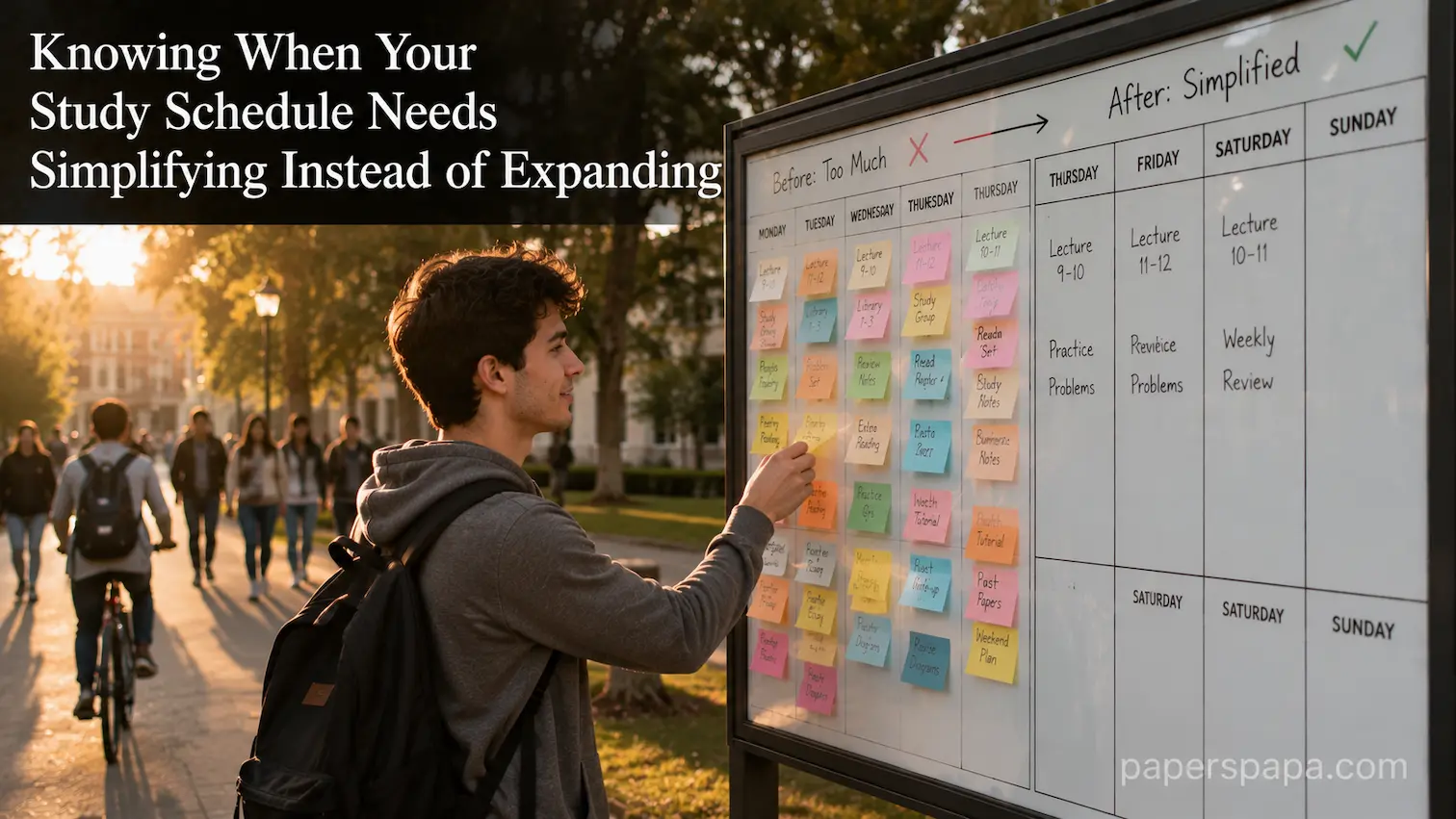
Knowing When Your Study Schedule Needs Simplifying Instead of Expanding

Almost every semester has a period where students feel like they are falling behind. Some subjects are difficult, assignments pile up, and approaching exams make it feel like there is not enough time. The initial reaction is often to cram more time into the schedule. Evenings are used for review, weekends are fully booked, and … Read more

Asking Better Questions Before Accepting Any Published Information

Most people grow up with the idea that the content of books, newspapers, magazines, or websites is likely verified and therefore accurate. However, although many publishers adhere to strict editorial guidelines, publication does not guarantee the accuracy of the information. Articles may contain inaccuracies or outdated information, omit essential details, include actual errors, or draw … Read more

Writing Paragraphs That Build One Clear Argument at a Time

A good academic paper is usually remembered for its clear ideas and concise writing. More often, readers appreciate it because every paragraph makes a meaningful contribution to the discussion. They do not have to pause to consider a section’s purpose or relevance to the topic. The argument unfolds naturally and logically, and the conclusion feels … Read more

The Point Where Too Many Sources Start Hurting Your Research

When students start a research project, they often hear one piece of advice repeated, almost as an unshakeable rule: gather as much information as possible. This leads many to the conviction that a paper with thirty cited articles is by definition better than a paper with only ten. However, the reality is much more complex. … Read more

Creating a Study System That Keeps Working During Busy Weeks

Some of the best study plans fail not because the plans themselves are ineffective but because they are designed for relatively quiet periods, not busy ones. Students often discover that as the material becomes more difficult, deadlines overlap, or personal obligations increase, their carefully constructed routines take more time and effort than they actually need. … Read more

Organizing References Without Depending on Memory

At school, writing a strong article is incredibly difficult if you have read a great article but can no longer remember the source. Almost every student experiences this dilemma. You remember an important fact, a useful definition, or a powerful argument, but you cannot recall the author’s name and the article seems impossible to find. … Read more