
Most of the stress from last-minute writing does not start the day before a deadline. Usually it starts much earlier, frequently with tiny decisions that appear harmless at the moment. Research is gathered but not categorized, notes are taken but not tagged, outlines are begun but not completed, and writing sessions happen only when there is enough spare time. None of these habits, in isolation, looks like a serious issue, but collectively they create a situation where the final days are packed with unfinished business.
Many pupils assume that the answer is to write faster. Speed can help in some cases, but it doesn’t cure an inefficient workflow. If someone writes fast but is continually hunting for missing sources, rewriting incomplete notes, and editing the same paragraph over and over again, they may still have difficulty finishing on time. A smoother process is often more important than a quicker pace of writing.
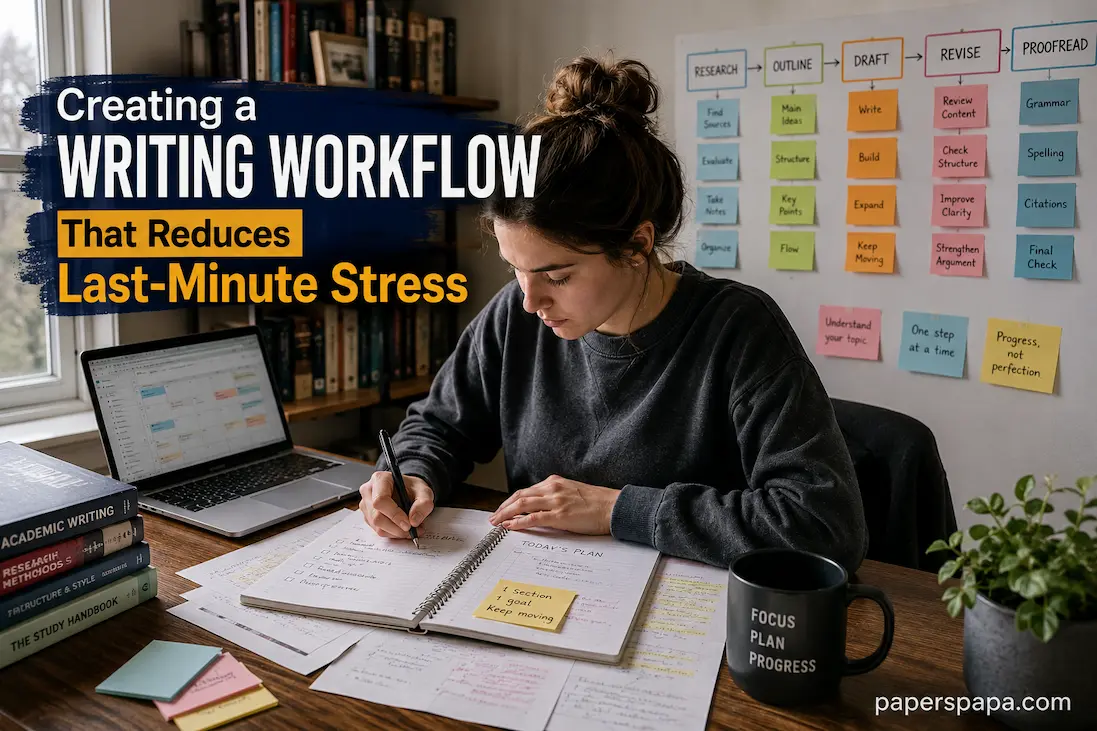
A writing workflow is just the sequence in which you do different things. A workflow assigns each of these activities—research, planning, drafting, editing, and proofreading—its proper place, rather than allowing you to do them whenever you feel like it. That means fewer unneeded interruptions, because you’re not switching as often between entirely different types of work. The primary benefit of a solid workflow isn’t that it yields perfect papers. The true usefulness is that it takes many unnecessary decisions out of the writing process. Instead of deciding what to do next each time you open your page, you know which stage requires your attention, allowing you to focus your energy on the paper itself.
Build Momentum Before Perfecting Paragraphs
One reason writing feels overwhelming is that many people want excellent material to come out of each session. They sit down and plan to write paragraphs that need little or no modification, but they get disheartened when the writing feels bad. Productive writing sessions, in fact, are more about mobility than perfection.
Imagine a study session with three paragraphs left to write but a much clearer general structure. While those pages still need updating, the project has made substantial progress. Now, consider spending the same amount of time refining one page and leaving the rest of the paper intact. The second option may seem good at first, but it usually leads to more strain later. Momentum is important because incomplete documents create uncertainty. Each completed portion removes some of the uncertainty and makes the remaining work easier to estimate. The progress is palpable, and that helps to sustain enthusiasm during longer academic endeavors.
Your Workflow Should Match the Way You Think
Some students naturally understand ideas while speaking or writing freely. Others prefer organizing everything before drafting the first paragraph. Neither approach is automatically better. Problems arise only when writers force themselves into a process that constantly interrupts their own way of thinking.
Pay attention to the moments when your work feels smooth. Perhaps outlining first helps you write with confidence, or maybe a rough draft allows your best ideas to appear before organization begins. Those observations are valuable because they reveal the workflow that fits you instead of someone else’s advice. An effective workflow is flexible enough to support different projects as well. A short reflective assignment may require a very different process from a detailed research paper. Allowing your workflow to adapt while keeping its basic structure consistent often leads to better long-term results.
Protect Your Writing Time From Small Interruptions
Not every delay comes from large distractions. Sometimes the biggest interruptions are tiny tasks repeated throughout the writing session. Looking for a missing reference, changing fonts, reorganizing folders, or checking formatting every few minutes can quietly consume far more time than expected.
A practical solution is to keep a simple list of tasks that can wait until later. If you notice a formatting issue or remember a source that needs verification, write yourself a brief reminder and continue writing. Returning to these small jobs during a dedicated editing session keeps your drafting process moving instead of constantly pulling your attention in different directions. This habit also reduces mental fatigue. Instead of remembering dozens of unfinished details while trying to write, you know they have already been recorded and can be handled at the appropriate stage.
A Different Question to End Each Writing Session
Many writers finish the day by asking whether they wrote enough words. While word count can be useful, it does not always reflect meaningful progress. Some of the most productive sessions involve reorganizing ideas, improving an outline, or solving a structural problem that allows the rest of the paper to develop more easily.
Before closing your document, ask yourself one simple question: “What should I do first when I return?” Leave a short note at the end of the draft describing the next paragraph, the next source to review, or the next section to revise. Starting with a clear direction removes much of the hesitation that often slows down the beginning of the next writing session. Instead of reopening the document and wondering where to begin, you immediately continue the work that was already in motion. Over time, this small habit creates a workflow that feels steady, organized, and far less stressful.
Think About the Next Session Before Ending the Current One
A surprisingly effective workflow begins before you close your laptop. Instead of stopping the moment you feel tired or reach a certain word count, spend a few minutes preparing for your next writing session. Leave yourself a short note describing what still needs attention, which source should be reviewed next, or where the argument should continue. These reminders reduce the time spent trying to remember your thoughts after returning to the project.
This habit also helps maintain continuity between writing sessions. Rather than starting from scratch each time, you pick up the paper where your thinking naturally stopped. The first fifteen minutes become productive instead of wasting time figuring out what you were planning to do. Small preparation at the end of one session often saves much more time at the beginning of the next.
A Week That Feels More Manageable
Consider two students who have seven days before a paper is due. The first student spends the opening days collecting information without a clear plan, writes most of the draft during the final two evenings, and then rushes through editing just before submission. The work is finished, but every stage overlaps with the next, making the entire week feel stressful.
The second student follows a different rhythm. The first two days are used for gathering and organizing sources, the next few sessions focus on building a complete draft, and the final days are reserved for revision and proofreading. There is still plenty of work to do, but each stage has its purpose, so the project feels more predictable and easier to manage. Each student might spend less or equal time on the assignment. The difference is that one workflow constantly creates urgency, while the other gradually reduces it by completing one stage before moving to the next.
Questions That Can Improve Your Routine
Every few writing sessions, pause and reflect on your process as well as evaluating the paper itself.
- Which task usually delays my progress the most?
- At what point do I begin feeling rushed?
- Do I spend more time switching between tasks than completing them?
- Which part of my workflow consistently makes the next stage easier?
These questions encourage gradual improvement rather than dramatic changes. Over several assignments, small adjustments to your routine often produce more reliable results than trying an entirely new writing method every time.
FAQs
1. What if I don’t have hours and hours of writing time?
Starting your sessions with a defined aim can make short sessions quite productive. Rather than attempting to tackle an entire area, pick a single activity, such as writing a paragraph, gathering references, or checking one source.
2. Do I have to revise right after I write?
It’s usually advisable to write a big chunk of the draft before you go into edit mode. This division helps keep the momentum going and takes away the temptation to spend too long perfecting work that might alter later.
3. How can I motivate myself for a long writing project?
Don’t only measure achievement by the final submission; look at the lesser milestones. finalizing a tough portion, finalizing an overview, and arranging your sources. All of these are signals the project is moving forward.
4. Does a writing workflow have to be the same for each assignment?
Not necessarily. The method may look the same, but the time spent on each stage may vary based on the subject, length of the assignment, and the amount of research available. A strict workflow is frequently less practical than a flexible approach.
Less Stress Comes From Better Preparation, Not Better Luck
Students often assume that calm writing experiences happen because someone had an easier topic or more free time. Often, the real difference is the way the work was organized from the beginning. A thoughtful workflow prevents small delays from turning into last-minute emergencies and allows each stage of the project to receive the attention it deserves.
The goal is not to eliminate every challenge from academic writing. Research can still take longer than expected, new ideas may require extra revision, and unexpected interruptions are part of everyday life. However, when your workflow gives every task a logical place, those challenges become much easier to manage. Instead of racing toward the deadline while juggling unfinished work, you move through the project with a clearer sense of direction, making both the writing process and the finished paper noticeably stronger.